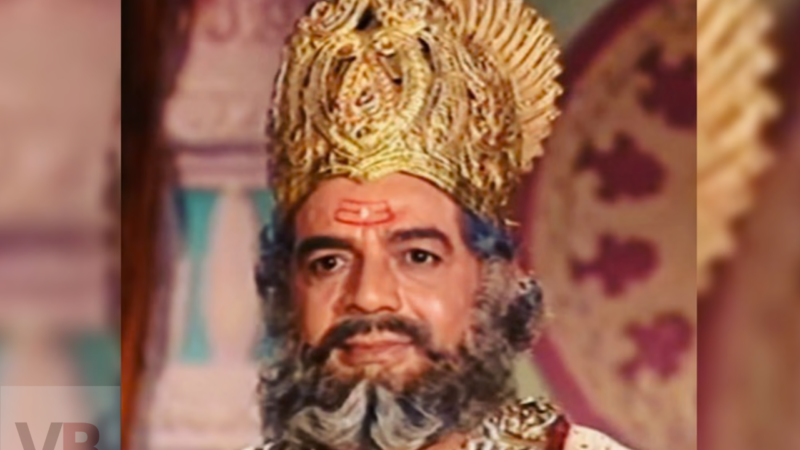
The Life and Legacy of Raja Janak in Hindu Mythology
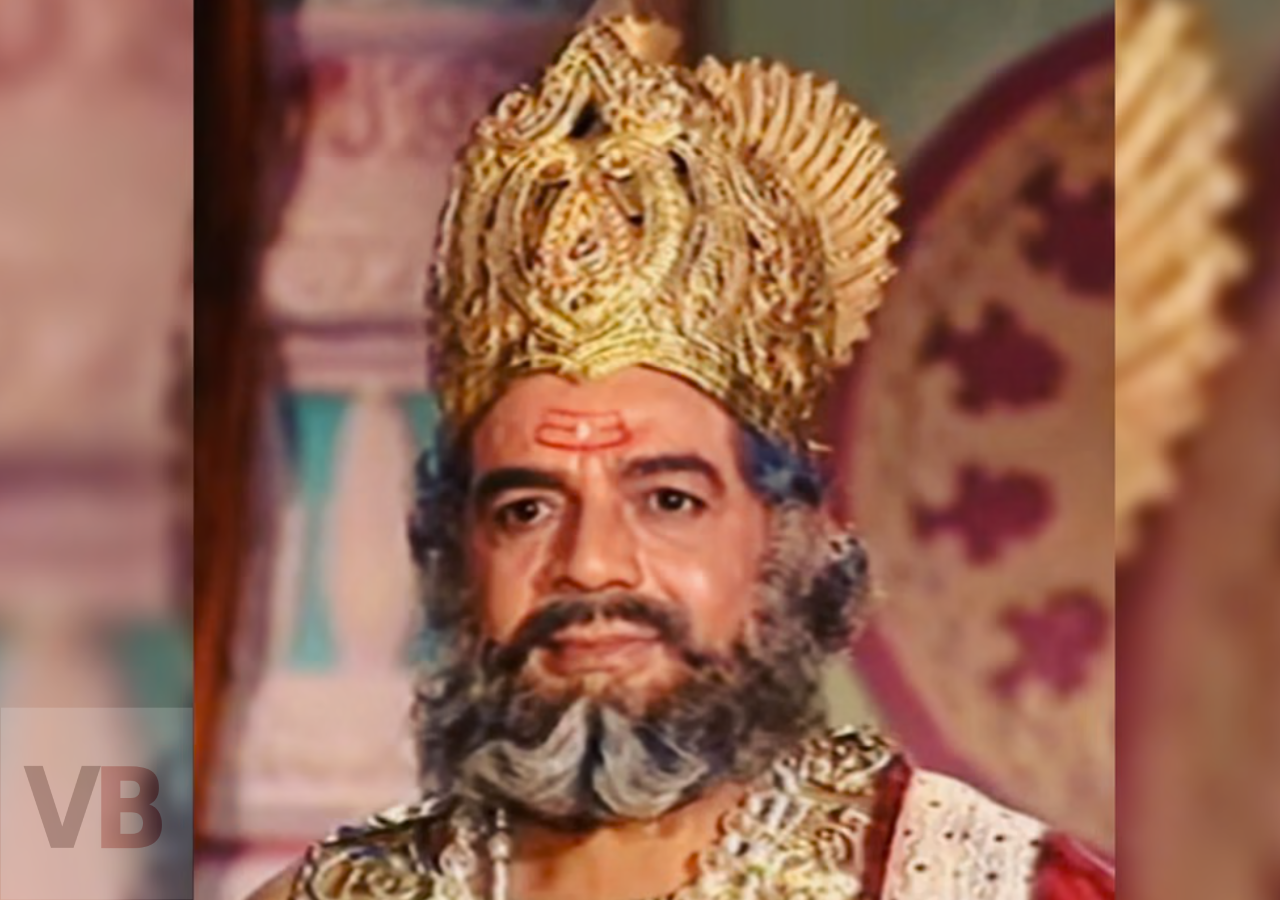
Raja Janak is one of the most respected kings in Hindu mythology, celebrated for his wisdom, righteous leadership, and spiritual knowledge. Best known as the father of Goddess Sita, the wife of Lord Rama, he holds an important place in the Ramayana and several Hindu philosophical traditions. His kingdom of Mithila is remembered as a center of culture, learning, and spiritual inquiry.
What makes Raja Janak particularly remarkable is that he is remembered not only as a king but also as a philosopher who understood the importance of balancing worldly responsibilities with spiritual growth. His life offers valuable lessons about leadership, family, humility, and the pursuit of truth.
Many readers want to know where Raja Janak ruled, who his wife and parents were, how Sita became his daughter, and who guided him on his spiritual journey. His story also raises a deeper question: how can someone manage the responsibilities of a kingdom while remaining devoted to spiritual wisdom?
This article explores Raja Janak’s life, family, kingdom, association with Goddess Sita, and enduring significance in Hindu mythology, while distinguishing traditional accounts from details that remain uncertain.
Who Was Raja Janak?
Raja Janak was the king of Mithila and the foster father of Goddess Sita in the Ramayana. He is widely known by the name Siradhvaja, also spelled Shīradhvaja, and is remembered as a ruler who combined political responsibility with philosophical understanding.
The name Janaka is also associated with a lineage of kings who ruled Videha. Therefore, not every reference to a Janaka in ancient Hindu literature necessarily identifies the same individual. The Janak associated with Sita is particularly prominent in the Ramayana, while other Janakas appear in philosophical texts.
Raja Janak is frequently described as a rajarshi, a term used for a king who possesses the qualities of a sage. Rather than measuring success solely through wealth, territory, or military power, his character emphasizes wisdom, justice, self-discipline, and devotion to duty.
His reputation extends beyond the story of Sita. The Bhagavad Gita refers to Janaka as an example of someone who attained spiritual perfection through action, demonstrating that a person need not abandon worldly responsibilities to pursue higher knowledge.
Raja Janak Kahan Ke Raja The (राजा जनक कहाँ के राजा थे)
Raja Janak was the king of Mithila, an ancient kingdom associated with the Videha region of the northern Indian subcontinent. The cultural region of Mithila includes parts of present-day northern Bihar in India and adjoining areas of southeastern Nepal.
In the Ramayana, Mithila is portrayed as a prosperous kingdom whose ruler values righteousness, religious traditions, and learned discussion. Its royal court becomes the setting for important events, including the arrival of Lord Rama and the marriage of Rama and Sita.
Mithila is also associated with a rich intellectual and cultural heritage. Its traditions are connected with Sanskrit learning, philosophical discussions, folk art, religious festivals, and the Maithili language.
The city of Janakpur in present-day Nepal is especially famous for its association with Raja Janak and Goddess Sita. Devotees visit the city to honour Sita and celebrate the sacred marriage of Rama and Sita.
Although Janakpur is strongly associated with these religious traditions, the precise historical boundaries of Janak’s kingdom and the identification of every place mentioned in the epic cannot be established with complete certainty.
Raja Janak ka Mahal kahan hai
Raja Janak’s palace is traditionally associated with Mithila, particularly the present-day city of Janakpur in Nepal. The city is one of the most important pilgrimage destinations connected with Goddess Sita.
The most famous landmark associated with Sita is Janaki Mandir, a prominent temple dedicated to the goddess. Its distinctive architecture, religious significance, and connection with the Ramayana attract pilgrims throughout the year.
Janakpur also hosts celebrations associated with Vivah Panchami, a festival commemorating the marriage of Rama and Sita. During these celebrations, devotees participate in religious ceremonies and remember the events traditionally associated with Janak’s royal household.
However, an important distinction should be made between religious tradition and archaeological evidence. Janaki Mandir is a temple associated with Sita, not a verified surviving palace of Raja Janak. The original royal residence described in epic traditions has not been conclusively identified as an existing structure.
Consequently, Janakpur is best described as the traditional location associated with Janak’s kingdom rather than a place where a surviving palace has been definitively authenticated.
Raja Janak Ki Patni Ka Naam Kya Hai
Raja Janak’s wife is traditionally known as Queen Sunayana, also spelled Sunaina. She is remembered in popular Ramayana traditions as the queen of Mithila and the mother who lovingly raised Goddess Sita.
Sunayana is portrayed as a dignified and compassionate woman who shares Janak’s happiness when Sita becomes part of their family. As Sita grows up, the queen helps provide the care, guidance, and values expected of a princess.
Although Janak’s role is central to the account of Sita’s discovery, Sunayana’s presence helps complete the picture of Sita’s family life. Their household is remembered as one in which affection, responsibility, and respect played important roles.
Details about Sunayana are not equally developed in every version of the Ramayana. Her name is widely recognized in devotional literature and later retellings, but readers should be aware that individual texts sometimes differ in the family information they preserve.
| Raja Janak Kahan Ke Raja The | Mithila |
| Raja Janak ka Mahal kahan hai | Janakpur in Nepal |
| Raja Janak Ki Patni Ka Naam Kya Hai | Sunayana |
| Raja Janak ke Pita Ka Naam | King Hrasvaroma |
| Raja Janak Ke Guru Kaun The | Sage Yajnavalkya and Sage Ashtavakra |
| Raja Janak Ki Wife Ka Naam | Sunayana |
| Raja Janak Ki Sasural Kahan Thi | Varanasi |
| Raja Janak ki mata ka kya naam tha | Rani Sumati |
| Raja Janak ki patni ka kya naam tha | Sunayana |
| Raja Janak ke bhai ka kya naam tha | Kushadhvaja |
Raja Janak Ki Wife Ka Naam
The answer is Queen Sunayana, also known as Sunaina, according to the widely followed traditional account.
This question is frequently searched in different forms, so it is useful to clarify the distinction between Sita’s biological origin in the epic narrative and her upbringing within Janak’s family. Janak and Sunayana are remembered as Sita’s parents because they accepted and raised her as their daughter.
Their relationship with Sita reflects an important theme in Hindu storytelling: parenthood involves love, protection, guidance, and responsibility, not merely biological connection.
The royal couple’s affection for Sita is also evident in the care taken over her marriage. Janak seeks a worthy husband for her, and the resulting union with Rama becomes one of the most celebrated events in the Ramayana tradition.
Raja Janak Ke Pita Ka Naam
According to the genealogy presented in the Valmiki Ramayana, Raja Janak’s father was King Hrasvaroma, also spelled Hrasvaroman.
In Valmiki Ramayana, Bala Kanda, Sarga 71, Janak describes his royal ancestry while speaking to King Dasharatha and the other members of Rama’s family. He explains that Hrasvaroma had two sons, with Janak as the elder and Kushadhvaja as the younger.
Hrasvaroma eventually entrusted the kingdom to Janak and retired to the forest. He also entrusted Janak with responsibility for his younger brother. This account presents Janak as a ruler who inherited not only the throne but also the duty to protect his family and govern according to dharma.
The passage is particularly valuable because it provides a direct account of Janak’s lineage within the epic narrative, rather than relying exclusively on later popular summaries.
Raja Janak Ke Guru Kaun The (राजा जनक के गुरु कौन थे)
Raja Janak is associated with several respected sages in Hindu literature, but no single guru is universally identified across every tradition.
Sage Yajnavalkya is especially important in the Brihadaranyaka Upanishad. Their philosophical exchanges explore the nature of knowledge, the Self, and spiritual liberation. Janak is portrayed as a king who actively seeks wisdom and invites learned people to discuss profound questions.
In these accounts, Janak does not merely rely on his royal position. He listens to scholars, asks questions, and tests ideas through discussion. His character demonstrates that the pursuit of truth requires curiosity and a willingness to learn.
Sage Ashtavakra is another figure associated with Janak, particularly through the Ashtavakra Gita. This philosophical text presents a dialogue concerning self-knowledge, attachment, and liberation. It is a significant part of the wider tradition surrounding Janak’s spiritual reputation, although its dialogue should not automatically be treated as a documented account of a formal teacher-student relationship.
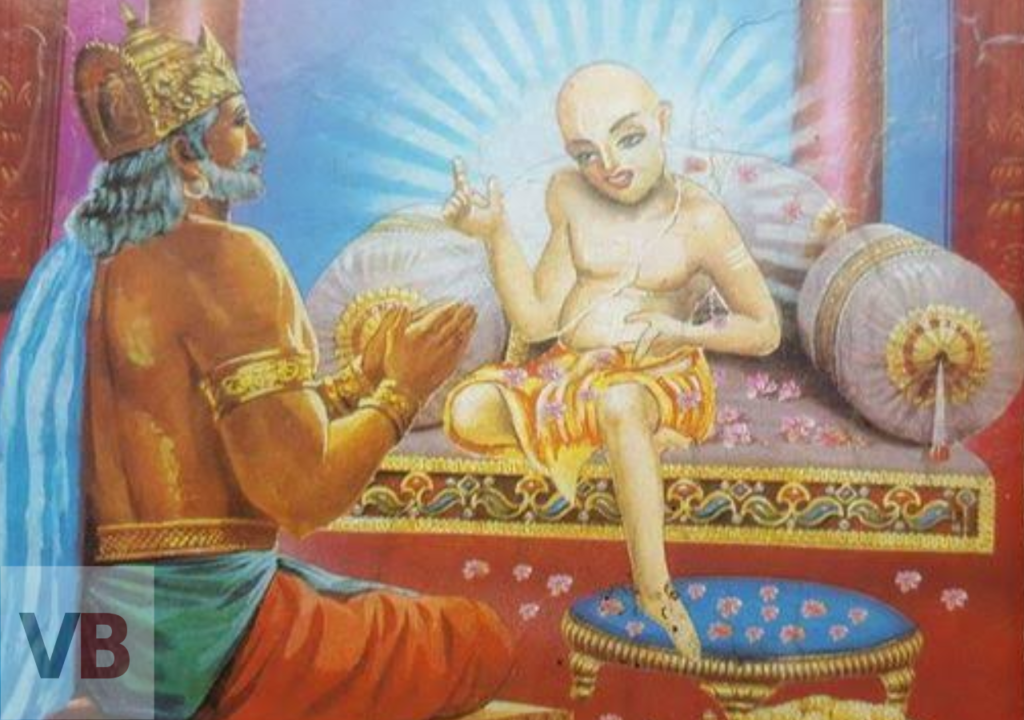
Together, these traditions portray Janak as a ruler deeply interested in understanding the nature of existence and the responsibilities of a wise person.
Raja Janak Ki Sasural Kahan Thi
The exact location of Raja Janak’s in-laws is not consistently established in the principal Ramayana traditions.
Sunayana is widely remembered as Janak’s wife, but accounts of her parents and birthplace are not sufficiently uniform to identify a particular city or kingdom as his sasural with confidence. Some later retellings provide additional genealogical details, but these should not be presented as universally accepted facts.
It is also important not to confuse Janak’s in-laws with the family into which his daughter Sita married. Sita’s marriage to Rama connected Mithila with Ayodhya, the kingdom of King Dasharatha.
This marriage established an important relationship between the royal families of the two kingdoms. The connection is celebrated in religious narratives and festivals that commemorate the marriage of Rama and Sita.
Therefore, while the relationship between Mithila and Ayodhya is central to the Ramayana story, the precise location of Raja Janak’s own sasural remains uncertain.
Raja Janak ka Janm Kaise Hua
Traditional accounts identify Janak as the son of Hrasvaroma, born into the royal lineage of Videha. His own birth is not described through the same miraculous circumstances associated with Sita.
The Valmiki Ramayana gives a genealogy tracing the kings of Janak’s dynasty back through earlier rulers of Videha. In this account, Janak is the elder son of Hrasvaroma and succeeds to the throne when his father retires to the forest.
Janak’s popular identity is also connected with the name Siradhvaja. The famous story of Sita’s discovery explains how he became known as her father, but it does not describe Janak’s own birth.
His exact birth date and historical birthplace have not been established through independently verified historical records. It is therefore more accurate to describe his birth through the traditional royal genealogy than to assign him a specific date or claim that a particular miraculous event marked his arrival.
Raja Janak ki mata ka kya naam tha
The name of Raja Janak’s mother is not consistently recorded in the principal account of his genealogy in the Valmiki Ramayana.
Bala Kanda, Sarga 71, identifies his father as Hrasvaroma and names his younger brother Kushadhvaja, but it does not establish his mother’s name in that passage. Some modern accounts provide additional names, but these should be treated cautiously unless they can be traced to a specific traditional source.
This is an important example of why religious and genealogical articles should distinguish well-supported textual details from information repeated in unsourced summaries.
The most responsible answer is that Raja Janak’s mother’s name is not clearly established in the principal genealogical passage of the Valmiki Ramayana.
Raja Janak ki patni ka kya naam tha (राजा जनक की पत्नी का क्या नाम था)
Raja Janak’s wife is traditionally called Sunayana or Sunaina. She is remembered as Sita’s mother and the queen of Mithila.
Sunayana’s role is particularly meaningful because Sita’s story begins with an extraordinary discovery, but her upbringing takes place within a loving royal household. Janak and Sunayana provide her with the care and guidance that shape her life as a princess.
The queen is generally portrayed as a woman of dignity and compassion. Although popular retellings sometimes expand her character in different ways, her association with Sita remains an established part of the familiar devotional tradition.
Raja Janak ke bhai ka kya naam tha (राजा जनक के भाई का क्या नाम था)
Raja Janak’s younger brother was Kushadhvaja, as described in Valmiki Ramayana, Bala Kanda, Sarga 71.
Janak explains that their father, Hrasvaroma, entrusted Kushadhvaja to his care when he passed responsibility for the kingdom to his elder son. Janak subsequently ruled according to dharma while maintaining an affectionate relationship with his brother.
Kushadhvaja later became king of Sankashya after Janak defeated King Sudhanvan, according to the epic narrative. Sudhanvan had challenged Janak over the sacred bow of Shiva and Sita.
Kushadhvaja’s family is also connected with the marriages of Rama’s brothers. In the familiar account, Sita marries Rama, Urmila marries Lakshmana, Mandavi marries Bharata, and Shrutakirti marries Shatrughna.
These marriages strengthen the relationship between the royal families of Mithila and Ayodhya and form an important part of the wedding celebrations described in the Ramayana.
How Did Raja Janak Discover Goddess Sita?
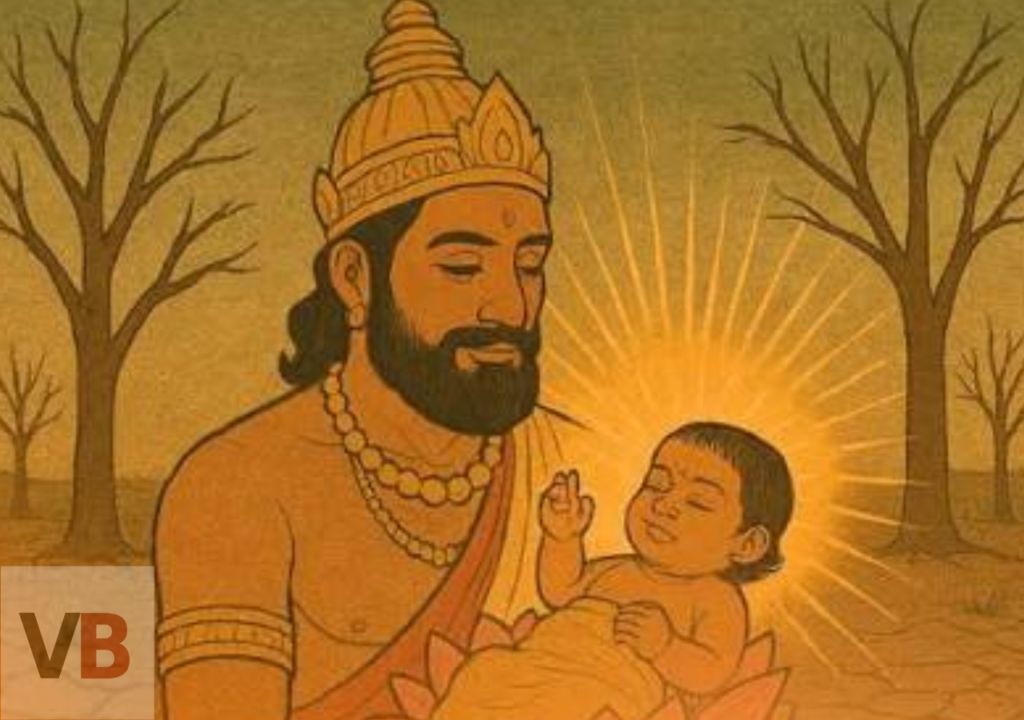
The discovery of Sita is one of the most memorable episodes associated with Raja Janak.
According to the Ramayana, Janak was preparing a field for a sacred ritual when he discovered an infant in a furrow made by his plough. He accepted the child as his daughter and named her Sita, a name associated with the furrow.
The story gives Sita a unique place in Hindu tradition. Unlike characters whose births are described through ordinary human circumstances, Sita is associated with the earth and is often revered as a divine figure connected with the Earth Goddess.
Janak’s decision to raise the infant as his daughter demonstrates his compassion and willingness to accept responsibility. The event also establishes the relationship between Sita and Mithila that remains central throughout the Ramayana.
In the epic, Sita’s unusual origin does not diminish her place within the family. She is raised as a princess, loved by her parents, and later becomes the wife of Rama.
Raja Janak and the Sita Swayamvar
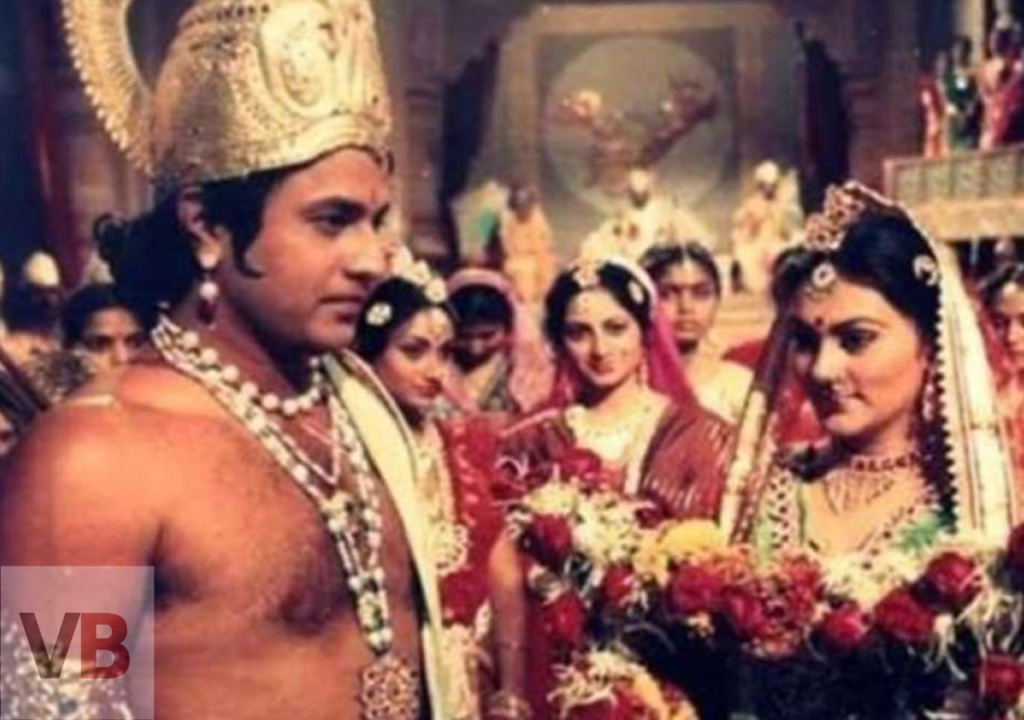
The marriage of Sita and Rama is the defining event of Janak’s story in the Ramayana.
As Sita reached marriageable age, Janak sought a suitable husband for her. The traditional account describes a challenge involving the mighty bow of Lord Shiva. A suitor had to demonstrate exceptional strength by lifting and stringing the bow.
Many kings attempted the task but failed. When Rama arrived in Mithila with Sage Vishwamitra and Lakshmana, he was invited to participate. Rama lifted the bow, and it broke as he attempted to string it.
Janak recognized Rama’s extraordinary ability and agreed to the marriage. King Dasharatha and the royal family of Ayodhya were invited to Mithila, and the wedding was celebrated with great joy.
The wedding narrative represents more than a contest of physical strength. In devotional interpretations, it demonstrates Rama’s divine greatness and the destined union between Rama and Sita. Janak’s role emphasizes a father’s responsibility to make a thoughtful decision concerning his daughter’s future.
The traditional account also describes the marriages of the other princes of Ayodhya to women from Janak’s extended family, further strengthening the bond between the two royal households.
| राजा जनक कहाँ के राजा थे | मिथिला |
| राजा जनक का महल कहाँ है | राजा जनक का महल जनकपुरधाम, नेपाल में स्थित है |
| राजा जनक की पत्नी का नाम क्या है | रानी सुनयना (सुनैना) |
| राजा जनक के पिता का नाम क्या है | महाराज ह्रस्वरोमा |
| राजा जनक के गुरु कौन थे | ऋषि अष्टावक्र, ऋषि याज्ञवल्क्य |
| राजा जनक की ससुराल कहाँ थी | काशी (वर्तमान वाराणसी, उत्तर प्रदेश) |
| राजा जनक की माता का क्या नाम था | रानी सुमति |
| राजा जनक की पत्नी का क्या नाम था | रानी सुनयना (सुनैना) |
| राजा जनक के भाई का क्या नाम था | कुशध्वज |
Raja Janak as a Philosopher-King
Raja Janak’s importance extends beyond the Ramayana. Hindu philosophical literature remembers him as a king who pursued spiritual knowledge while continuing to fulfil his responsibilities.
In the Brihadaranyaka Upanishad, Janak of Videha appears in discussions with learned sages, particularly Yajnavalkya. These exchanges concern the nature of knowledge and the ultimate reality behind ordinary experience.
The Bhagavad Gita, Chapter 3, Verse 20, also refers to Janak and other kings who attained perfection through action. Krishna uses their example to explain why Arjuna should continue to perform his duties rather than abandon them.
This teaching is closely connected with karma yoga, the path of action performed with the right understanding and attitude. Janak represents the ideal of someone who remains engaged in the world without making personal gain the sole purpose of action.
His example challenges the assumption that spirituality always requires withdrawal from society. A ruler can pursue self-knowledge while protecting people, administering justice, and fulfilling family obligations.
Lessons to Learn from Raja Janak’s Life
Raja Janak’s story continues to offer valuable lessons for modern readers.
1. Wisdom should guide leadership. A good leader needs sound judgment, a willingness to learn, and a commitment to fairness.
2. Duty and spiritual growth can coexist. Janak’s example shows that fulfilling responsibilities can itself become a meaningful path when approached with the right attitude.
3. Parenthood is built on care and commitment. His relationship with Sita emphasizes the importance of love, protection, and guidance in raising a child.
4. Humility makes learning possible. Despite his royal status, Janak seeks the company of sages and engages with difficult philosophical questions.
5. Ethical conduct matters more than status. His legacy emphasizes righteousness and responsibility over wealth, prestige, or authority alone.
These lessons help explain why Janak remains a respected figure in discussions of leadership, family values, philosophy, and Hindu religious traditions.
The Cultural Legacy of Raja Janak
Raja Janak remains closely connected with the cultural and religious identity of Mithila. His association with Sita is reflected in regional storytelling, religious ceremonies, paintings, literature, and performances of the Ramayana.
Janakpur is especially important to devotees because of its association with Sita. Janaki Mandir stands as a prominent pilgrimage destination, and celebrations such as Vivah Panchami commemorate the marriage of Rama and Sita.
The traditions surrounding Janak also connect religious devotion with the intellectual heritage of Mithila. His portrayal as a philosopher-king reflects the value placed on learning, debate, self-discipline, and the pursuit of truth in Hindu literature.
Although the precise historical identity and lifetime of the epic Janak remain uncertain, his significance in religious and cultural traditions is enduring. His story continues to be retold because it brings together family devotion, righteous kingship, and spiritual inquiry.
Frequently Asked Questions About Raja Janak
Who was Raja Janak?
Raja Janak was the king of Mithila and the foster father of Goddess Sita in the Ramayana. He is also remembered as a philosopher-king in Hindu spiritual literature.
What was Raja Janak’s real name?
He is commonly identified as Siradhvaja or Shīradhvaja Janaka.
Who was Raja Janak’s father?
The Valmiki Ramayana identifies his father as Hrasvaroma.
Who was Raja Janak’s wife?
His wife is traditionally known as Queen Sunayana or Sunaina.
Who was Raja Janak’s brother?
His younger brother was Kushadhvaja.
Where was Raja Janak’s kingdom?
His kingdom was Mithila, traditionally associated with parts of northern Bihar in India and southeastern Nepal.
Who was Raja Janak’s guru?
Yajnavalkya is the most prominent sage associated with Janak’s philosophical discussions in the Brihadaranyaka Upanishad. Ashtavakra is also connected with Janak in the Ashtavakra Gita.
How did Raja Janak find Sita?
According to the Ramayana, Janak discovered Sita as an infant in a furrow while ploughing a field for a sacred ritual. He raised her as his daughter.
Where was Raja Janak’s palace?
His palace is traditionally associated with Mithila, especially present-day Janakpur in Nepal. However, no surviving building has been conclusively verified as his original palace.
Why is Raja Janak remembered as a philosopher-king?
He is remembered for combining royal duties with the pursuit of spiritual wisdom. His example in the Bhagavad Gita illustrates the importance of responsible action and the welfare of society.
Conclusion
Raja Janak occupies a distinctive place in Hindu mythology because he represents both the responsibilities of a king and the wisdom of a spiritual seeker. His association with Goddess Sita makes him central to the Ramayana, while his philosophical reputation connects him with important Hindu teachings about knowledge, action, and liberation.
From his kingdom of Mithila and his family relationships to Sita’s discovery and marriage to Rama, his story combines memorable epic events with enduring moral lessons. The accounts of his conversations with sages also remind readers that learning and self-examination are essential qualities of wise leadership.
Some details about Janak’s family and historical background vary across traditions, and not every popular claim can be verified from the principal texts. Nevertheless, his central legacy remains clear: true greatness lies in combining wisdom with responsibility, compassion with strength, and worldly duties with the pursuit of truth.
To read more interesting articles visit – https://ventureblogging.com
References for Further Reading
- Valmiki Ramayana, Bala Kanda, Sarga 71 — Janak’s account of his royal lineage, father, brother, and Sita’s marriage.
- Bhagavad Gita, Chapter 3, Verse 20 — Janak as an example of attaining perfection through action.
- Brihadaranyaka Upanishad — traditional philosophical discussions involving Janak of Videha and Yajnavalkya.