
Best Strength Training Exercises for Men Who Want to Build Muscle

Want to build noticeable muscle but feel stuck doing the same exercises at the gym? You are not alone. Many men spend hours lifting weights without seeing the results they expect because their workouts lack consistency, progression, or the right combination of exercises.
Building muscle is not simply about lifting the heaviest weight possible. Effective training requires exercises that target major muscle groups, good technique, adequate recovery, and gradual increases in training demands. The right Strength Training Exercises for Men can help create a balanced routine that supports muscle growth while improving overall strength and physical performance.
In this guide, we’ll look at some of the most effective exercises for building muscle and explain how to use them safely and effectively.
Why Strength Training Matters for Muscle Growth
Strength training places controlled stress on muscles, encouraging them to adapt and become stronger over time. When combined with sufficient protein, calories, sleep, and recovery, resistance exercise can contribute to muscle growth.
You also do not need an extremely complicated program. A routine built around fundamental movements can train your chest, back, shoulders, arms, legs, and core while allowing you to gradually increase your workload.
The key is progressive overload. This means gradually challenging your muscles by increasing weight, repetitions, training volume, or improving exercise technique as your fitness develops.
Also Read – Strength Training for Women: Benefits and Beginner-Friendly Exercises
Best Strength Training Exercises for Men
1. Barbell Squats
Squats are one of the most useful lower-body exercises for developing strength and muscle. They primarily train the quadriceps and glutes while also involving the hamstrings and core.
Start with a manageable weight and focus on maintaining a controlled movement. Your knees should track naturally in line with your feet, while your torso remains stable throughout the repetition.
2. Bench Press
The bench press is a classic upper-body movement that primarily works the chest while also involving the shoulders and triceps. It can be performed with a barbell or dumbbells depending on your experience and equipment.
Avoid treating the exercise as a test of how much weight you can lift. Controlled repetitions and proper positioning are more important than chasing a heavier number.
3. Deadlifts
Deadlifts work several major muscle groups, including the glutes, hamstrings, back, and core. Because the movement involves lifting a weight from the floor, proper technique is particularly important.
Keep the weight close to your body and maintain a stable spine as you lift. Beginners should consider learning the movement with lighter weights before progressing.
4. Pull-Ups
Pull-ups are excellent for developing the upper back and arms while also challenging your grip and core. If you cannot perform a full pull-up yet, assisted pull-ups or controlled machine variations can help you build the necessary strength.
As you become stronger, gradually increase your repetitions or add resistance rather than relying on momentum.
5. Overhead Press
The overhead press targets the shoulders and also engages the triceps and upper body stabilizing muscles. It can be performed with dumbbells or a barbell.
Keep your core engaged and avoid excessively arching your lower back. Using a weight that allows you to maintain control throughout the movement is usually more productive than simply lifting heavier.
6. Barbell or Dumbbell Rows
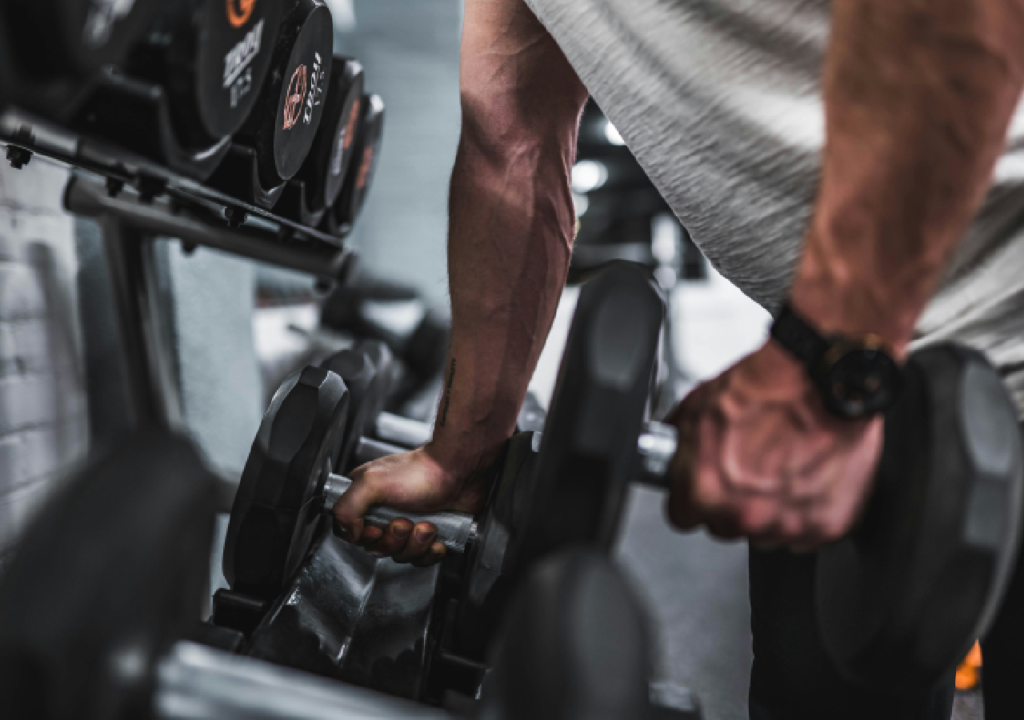
Rows are important for developing the back and creating balance with pressing exercises. They primarily train the upper back and also involve the biceps.
Focus on pulling with your back rather than simply moving the weight with your arms. A controlled lowering phase can also make each repetition more effective.
7. Lunges
Lunges are useful for developing the legs while challenging balance and coordination. Because each leg works independently, they can also help address strength differences between sides.
You can perform forward, reverse, or walking lunges with body weight or dumbbells. Beginners should start with body weight until they feel comfortable with the movement.
8. Dumbbell Curls and Triceps Extensions
Isolation exercises can complement compound movements by giving the arms additional training volume. Dumbbell curls focus on the biceps, while triceps extensions target the muscles at the back of the upper arm.
These exercises are best viewed as additions to a well-rounded program rather than the foundation of your entire workout.
How to Build an Effective Muscle-Building Routine
Choosing good exercises is only part of the process. Your results will also depend on how you organize your workouts and progress over time.
A balanced routine should train all major muscle groups instead of focusing heavily on visible muscles such as the chest and arms. Compound exercises can form the foundation, while isolation movements can provide additional targeted work.
For many beginners, training each major muscle group regularly while allowing adequate recovery between demanding sessions can be a practical approach.
Keep these principles in mind:
- Prioritize technique: Learn the correct movement before increasing weight.
- Progress gradually: Add weight or repetitions when your current workload becomes manageable.
- Train consistently: Regular workouts matter more than occasional extremely hard sessions.
- Allow recovery: Muscles need time to recover and adapt after training.
- Support your workouts with nutrition: Adequate protein, calories, carbohydrates, and fluids can support training and recovery.
- Get enough sleep: Consistent quality sleep is an important part of physical recovery.
Common Mistakes to Avoid
One of the biggest mistakes is trying to progress too quickly. Adding weight before mastering technique can make exercises less effective and may increase the risk of injury.
Another common problem is changing workouts constantly. Your muscles need repeated exposure to movements so you can improve your technique and gradually increase your training demands.
Ignoring the lower body is another mistake. A strong physique requires more than a developed chest and arms, so exercises such as squats and lunges deserve a regular place in your routine.
Finally, remember that muscle growth does not happen during the workout itself. Training provides the stimulus, while nutrition and recovery help your body adapt.
Creating a Sustainable Training Approach
The best Strength Training Exercises for Men are not necessarily the most complicated ones. A simple combination of squats, presses, pulls, hinges, rows, and accessory movements can provide a strong foundation for muscle development.
Instead of measuring every workout by how exhausted you feel afterward, pay attention to measurable progress. Better technique, additional repetitions, increased resistance, and improved control are all signs that your training is moving forward.
If you are new to resistance training, consider working with a qualified fitness professional to learn proper technique, particularly for exercises such as squats and deadlifts.
Frequently Asked Questions
What are the best strength training exercises for men to build muscle?
Some of the most effective exercises include squats, bench presses, deadlifts, pull-ups, overhead presses, rows, and lunges. These movements target multiple major muscle groups and can form the foundation of a muscle-building routine when combined with progressive overload, proper technique, balanced nutrition, and adequate recovery.
How often should men do strength training to build muscle?
Training frequency depends on your experience, goals, workout intensity, and recovery ability. Many men can make good progress by strength training regularly while allowing sufficient recovery between demanding sessions. Beginners should generally focus on consistent workouts, proper technique, and gradual progression rather than exercising intensely every day.
Can beginners build muscle with strength training?
Yes, beginners can build muscle through consistent resistance training. Starting with manageable weights and learning proper technique allows the body to adapt safely. A balanced program that includes compound exercises, adequate protein, sufficient calories, quality sleep, and recovery can support muscle development as strength gradually improves.
How many repetitions are best for muscle growth?
Muscle growth can occur across a relatively broad range of repetitions when the exercise provides an appropriate training stimulus. Instead of focusing on one specific repetition number, prioritize controlled technique, suitable resistance, adequate training volume, and progressive overload. Your training experience and individual goals should also influence your repetition choices.
What exercises build muscle the fastest?
Exercises such as squats, deadlifts, bench presses, rows, pull-ups, and overhead presses efficiently train large muscle groups. However, no single exercise guarantees faster muscle growth. Results depend on consistent training, progressive overload, nutrition, recovery, sleep, and individual factors. A balanced routine is generally more useful than relying on one exercise.
Should men lift heavy weights to build muscle?
Heavy weights can contribute to muscle growth, but they are not essential for everyone. Muscle development can occur with different resistance levels when exercises are performed with appropriate effort and technique. Beginners should prioritize controlled movement and gradually increase resistance rather than immediately attempting very heavy weights.
How important is nutrition for muscle growth?
Nutrition plays an important role in supporting muscle growth and recovery. Adequate protein, calories, carbohydrates, healthy fats, and fluids can help support training demands. A well-balanced diet should complement your exercise routine rather than replacing it. Individual nutritional needs vary based on body size, activity level, goals, and health.
How long does it take to see results from strength training?
The timeline varies between individuals because results depend on training consistency, nutrition, recovery, genetics, age, and previous fitness experience. Beginners may notice improvements in strength and exercise performance relatively early, while visible changes in muscle size generally take longer. Consistent training and gradual progression are important for sustainable results.
Conclusion
Building muscle requires more than simply spending time in the gym. Effective exercises, progressive overload, consistent training, proper nutrition, and adequate recovery all work together to produce results.
Exercises such as squats, bench presses, deadlifts, pull-ups, overhead presses, rows, and lunges provide a strong foundation for a muscle-building routine. Start with manageable resistance, prioritize good form, and gradually challenge yourself as your strength improves.
With patience and consistency, these Strength Training Exercises for Men can become the foundation of a sustainable training routine designed to help you build strength and muscle over time.
Medical and safety note: Exercise carries a risk of injury. If you have a medical condition, are recovering from an injury, or are new to strength training, consult a qualified healthcare professional or fitness professional before beginning a new exercise program. Stop exercising if you experience sharp pain, dizziness, or other concerning symptoms.
To read more interesting articles visit – https://ventureblogging.com